

Written By: Namrata Bose
Some films end with the credits. Others stay long after, lingering in the corners of your mind, quietly nudging you to think, to feel, to question. Gargi was one of those films for me. As someone who began my career in social work and later moved into mental health practice, I have often come across stories that do not fit neatly into the good–bad binary. Families torn apart by crime, children carrying wounds that no one sees, women struggling between loyalty and conscience. Real life is rarely black and white. Gargi captures that greyness with rare honesty.
The Story That Cuts Deep
The film revolves around Gargi (Sai Pallavi), a schoolteacher from a lower middle class family. Her father works as a security guard in an apartment and her mother earns some extra money by selling idli batter. Her father is accused of sexually assaulting a nine year old child where he was working. For her, it is not just an accusation; It is the collapse of her world. That bond of unconditional trust she had in her father suddenly starts to crack.
What adds another layer to Gargi’s journey is her own past trauma of sexual violence. As a
child, she herself was a victim. Her father, at that time, had protected her from an assault, and that memory had shaped her lifelong loyalty towards him. She grew up believing he was her savior, the one who shielded her when she was most vulnerable. That belief is why she clings so fiercely to his innocence now. The film shows us how trauma has its triggers. For Gargi, the color yellow becomes unbearable.
Whenever she sees her younger sister wearing a yellow dress, it takes her back to her own
assault, making her relive what she had endured as a child. But even in that pain, Gargi channels her energy into protecting her sister, vowing that what happened to her will never happen to the next generation. That instinct is something I have seen often in survivors. The deep drive to protect others even when they are still healing themselves.
The Denial and the Shattering Truth
Because her father once saved her, Gargi builds her world around the belief that he could never harm anyone. This denial is not unusual. In families, I have seen how survivors often place their trust in certain figures so completely that acknowledging their betrayal feels impossible. It is safer to cling to denial than to face the truth.
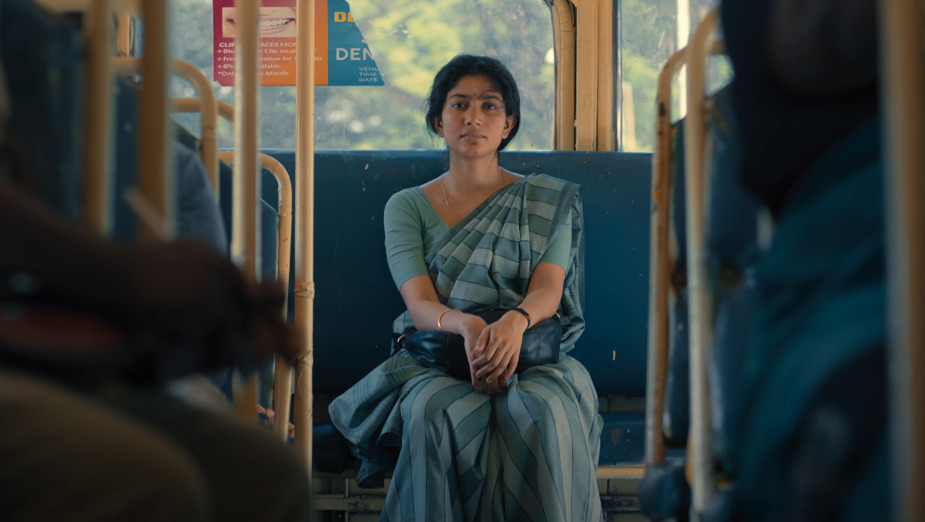
But the strength of Gargi lies in how it slowly, almost painfully, dismantles her denial. When
the evidence becomes undeniable, and she realizes that her father is, in fact, the real culprit, her world shatters. The betrayal is not just that her father committed the crime, it is that the very person she thought had once protected her from violence turned out to be capable of inflicting it on another child.
The Subtle, Haunting Ending
The film does not end with a dramatic outburst or a heavy-handed moral. Instead, it is quiet, almost subdued. That subtlety makes it even more powerful. Gargi walks away, carrying the unbearable weight of truth. There is no triumph here, only the painful dignity of acceptance. As a mental health professional, I found this portrayal deeply respectful. In reality, survivors and families rarely find closure wrapped neatly with justice. What they find is the strength to acknowledge, to accept, and eventually, to rebuild. The film honors that reality by refusing to romanticize or oversimplify Gargi’s journey.
Why It Matters
For me, Gargi was not just a courtroom drama. It was a story about trauma, memory, denial, and the courage to confront truths that threaten to destroy us. Gargi’s character reminded me of the countless survivors who carry invisible scars, yet still summon the strength to protect others. The film also raises uncomfortable but necessary questions: What happens when the person we trust most turns out to be the one causing harm? How do we, as a society, respond when loyalty and justice collide? And, most importantly, how do we create a world where survivors can speak without fear, without shame, and without being silenced?
Beyond the Screen
Gargi is not an easy watch, but it is a necessary one. It reminds us that justice is not just about verdicts. It is about acknowledging pain, standing by truth, and choosing dignity, no matter how difficult that choice may be. For those of us in society whether parents, teachers, neighbors, or professionals, the film is a reminder that children’s safety cannot be compromised, and survivors’ voices cannot be dismissed. Trauma does not end with an incident; it lingers, shaping how survivors live, love, and protect. Our role is not only to believe them but also to ensure that silence does not become their only companion.
Watch Gargi not only as a film, but as a mirror. A mirror to how we love, how we deny, and how we must, ultimately, gather the courage to face the truth.
Images are created with the help of Canva and Gemini AI tools.